
COP30 for a global response plan to close the ambition and implementation gap.
This is a Fastenaktion position.
COP30 stands as a defining moment for humanity and our common home. The Paris Agreement has guided the global community away from the most catastrophic warming pathways of 3-4°C toward approximately 2.1-2.6°C. This is progress to be acknowledged. Yet, the newly NDCs submitted this year remain dangerously inadequate. For millions, especially the poor and vulnerable, a projection of 2.1-2.6 degrees of global warming still means profound suffering, displacement, and loss.
This is not only a policy gap but a moral failure. To delay further is to deepen injustice. The recent advisory opinion of the International Court of Justice has underscored that limiting global temperature rise to 1.5°C is both a legal obligation and a moral imperative.
A Global Response grounded in Justice and Solidarity must include:
- Acknowledging Progress and Gaps: Recognize the achievements of the Paris framework while confronting the persistent shortfall in ambition that continues to endanger affected communities.
- Enhanced NDCs: All nations, particularly rich countries and major emitters, must submit enhanced NDCs before COP31 that reflect their fair share of responsibility and capacity.
- First Global Stocktake: All countries, particularly rich countries and major emitters, must integrate the agreements from the first Global Stocktake into the enhanced NDCs, including how to advance renewable energy, phase out fossil fuels, end deforestation by 2030, and ensure equitable, grants-based support for developing countries.
- Fossil Fuel Transition: COP30 shall commit to a process that results in a timeline for a transparent and equitable phase-out of fossil fuels, respecting differentiated responsibilities.
- Strengthened Implementation: Rich and G20 nations are called to strengthen their climate laws and policies in line with equity, shared responsibility, and human rights, acting swiftly beyond current pledges to serve the care of our common home.
- Climate Finance: Establish a clear pathway to scale up accessible and predictable quality climate finance to enable all nations to act with integrity and urgency.
- Just Transition: Embed fairness and inclusion at the heart of the transition, through mechanisms such as the Belém Action Mechanism, ensuring that no one is left behind.
- Restoring Trust: The COP30 Leaders’ Summit and the final outcome of COP30 must reflect this renewed global process, strengthening multilateral cooperation as a pathway to peace and sustainability.
- Process: COP30 must provide the necessary process for the global response plan to be agreed upon. This includes the leaders’ summit.
An analysis of civil society of NDCs from G20 and selected countries
The analysis shows that submitted NDCs from G20 and selected countries are insufficient, demanding an urgent revision and call for a global response plan.
COP30 must deliver clear signals that the Paris Agreement Crediting Mechanism will not perpetuate injustices.
To learn more, join us at our Side-Event on 11th of November 16h45 in Room 6.

Renewable Energy for the People
The use of fossil energy is responsible for more than 70% of global GHG emissions. An energy transition towards renewable energies is urgent in order to stay well below 2°C global temperature increase. It is important that social aspects are taken into account in the energy transition. Climate just renewable energy means socially just renewable energy. Energy production has to include communities and their needs (“people dimension”), enabling access to sufficient renewable energy (“access dimension”) while respecting planetary boundaries (“planet dimension”).

People
Renewable energy production shall be steered by transparent mechanisms and through participation of all stakeholders favouring the community where energy is produced, taking into account gender specific inequalities.

Access
Renewable energy production shall enable marginalized communities to afford and access reliable energy services of quality via decentralized installations and therefore contribute to poverty reduction through a positive influence on education, local capacities, health, storage of food etc.

Planet
Renewable energy production shall contribute to a reduction of greenhouse gas (GHG) emission and have no negative or only minimal negative impact on the natural environment and biodiversity. In addition, energy efficiency and sufficiency are key and must in particular be addressed by societies/communities of high energy consumption.
False Solutions
Not all renewable energies have positive effects on local development. For example hydropower-plants of different scale can have considerable negative effects on nearby communities. Displacement, loss of livelihood, poorer health and loss of cultural heritage are some of the worst impacts of dams’ construction.
Poor and vulnerable groups (rural populations, small-scale farmers and indigenous communities) often bear a disproportionate share of the negative impacts. In many cases communities do not have access to the generated electricity.
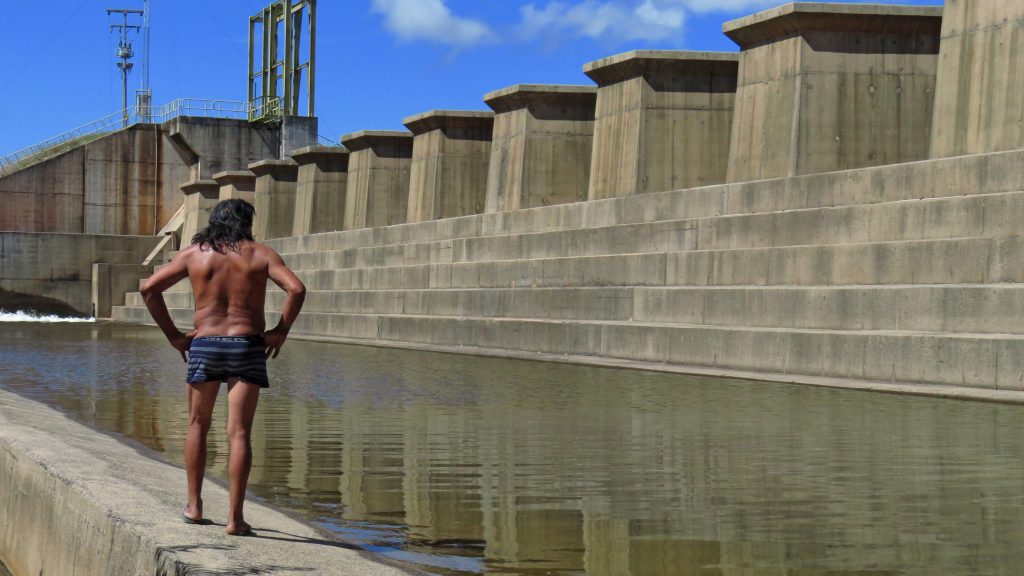
160 dams threaten Juruena
Not everything labeled as renewable energy is good, but potentially causes sever environmental and social damage to the environment and its residents.
Good Solutions
A transition towards renewable energies is pivotal for achieving the Paris Agreement. At the same time, energy provision must act as a driver for improving livelihoods of people. Thus, social aspects are central to the design of sustainable energy solutions in order to create positive effects on communities. On a social, ecological and economical level. Transitioning together towards a world of decentralized and jointly managed energy provision.
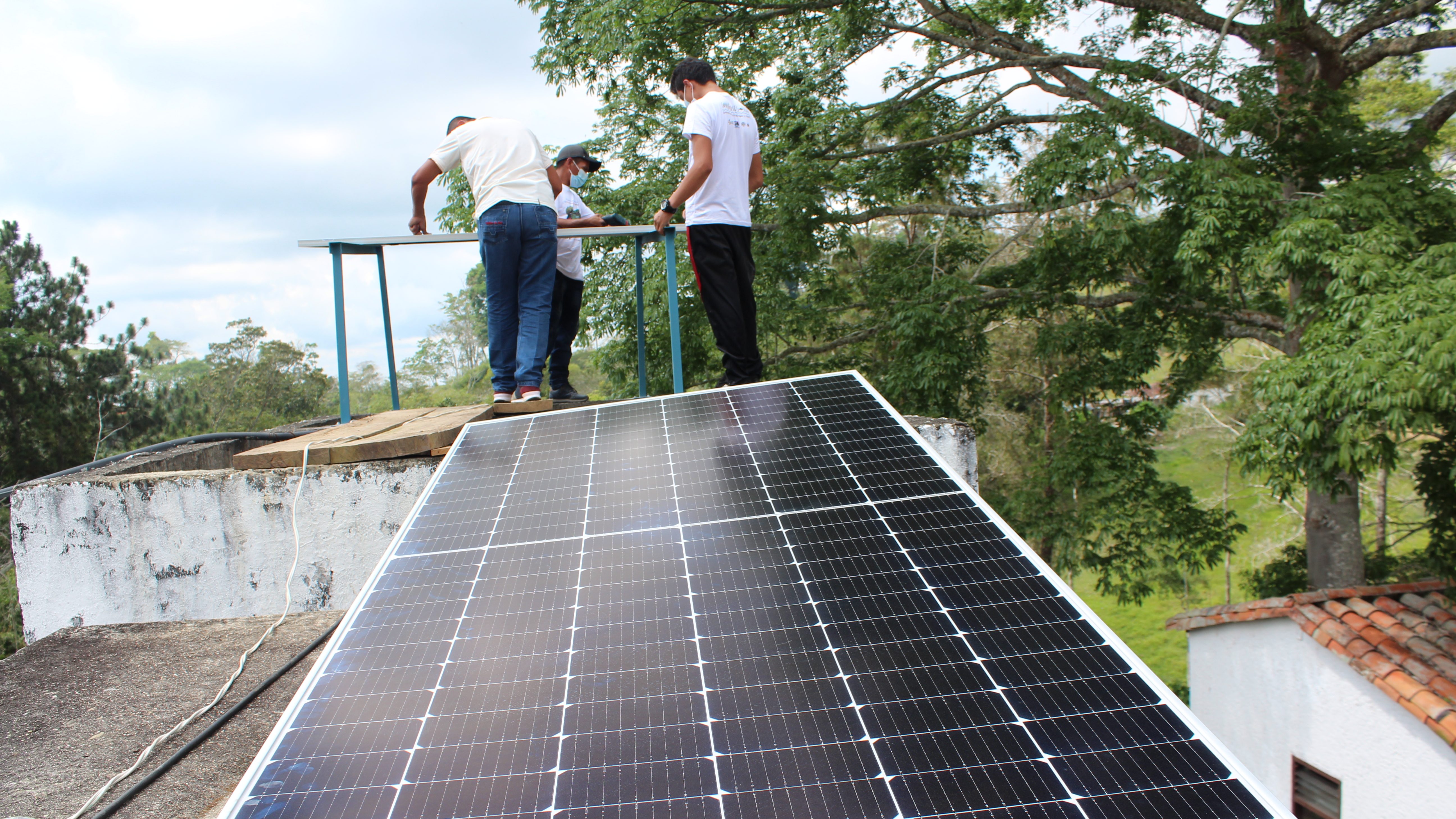
Community Energy Colombia
Community-driven energy projects in Santander, Colombia improve living conditions and contribute to the needed energy transition.
 Energy and Climate Justice